 Acrylic Product Customization

A new assessment adds evidence to the discussion around PMMA chemical recycling, while also showing why environmental claims need careful qualification. In an announcement dated October 26, 2026, Sumitomo Chemical reported that a study by Japan’s Plastic Waste Management Institute found approximately 68% lower greenhouse gas emissions for its recycling technology under two defined comparison scenarios. For acrylic buyers, the useful takeaway is the importance of matching every carbon claim to a specific material route and assessment boundary.
Industry news and procurement analysis. Original company announcement: October 26, 2026. Published by Enjoy Acrylic: November 17, 2026.
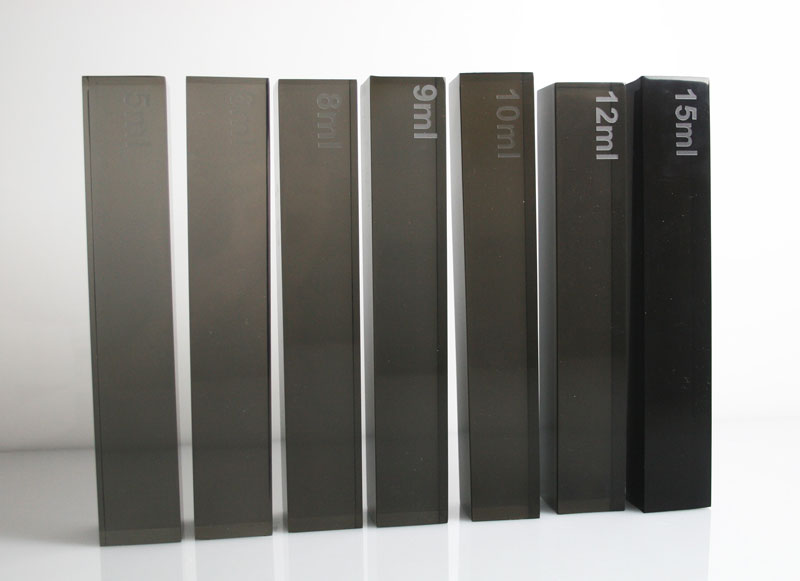

What the PMMA chemical recycling assessment compared
According to Sumitomo Chemical, the association’s study examined the technology from both a waste-treatment perspective and a product-manufacturing perspective. These are separate comparisons; their results should not be added together.
- Waste treatment: The assessment compared incinerating used PMMA with chemically recycling it into methyl methacrylate, or MMA, and using the recovered monomer as feedstock for PMMA. The company reported an approximately 68% reduction in greenhouse gas emissions for the recycling route under the study conditions.
- Product manufacturing: The assessment compared production using conventional fossil-derived raw materials with production using MMA recovered from PMMA waste. Sumitomo Chemical reported an approximately 68% reduction for this comparison as well.
The announcement says that life-cycle assessment specialists guided the association’s work and reviewed the evaluation results. It also explicitly cautions that the findings depend on the assessment scope, reference cases and calculation conditions. Actual reductions can vary with feedstock, equipment, energy sources and operating conditions.
How the technology recovers acrylic feedstock
The technology, jointly developed by Sumitomo Chemical and The Japan Steel Works, uses thermal decomposition to return PMMA to MMA monomer. The company states that it installed demonstration equipment at its Ehime Works in 2022 and began global licensing in February 2026. Its October announcement concerns the environmental assessment; it does not announce a new recycling plant opening.
An earlier joint release with Lummus Technology, published in February 2026, described commercial availability of the recycling technology and an expected life-cycle emissions reduction of approximately 50% based on Sumitomo Chemical’s own calculations. That figure and the October study’s approximately 68% result use different assessment conditions. They cannot be treated as a simple before-and-after improvement in process performance.
What this means for acrylic display buyers
The following is Enjoy Acrylic’s procurement analysis of the announcement, rather than an additional finding of the study. The development gives buyers a concrete reason to request better evidence when assessing recycled acrylic. It does not establish that every recycled sheet, resin grade or finished display achieves the same reduction.
Ask for a product-specific environmental statement
When comparing quotations, ask the material supplier to identify the recycling route, recycled-content claim and supporting documentation. A resin-level assessment may not include sheet production, fabrication, printing, packaging or transport. The environmental impact of a finished retail fixture therefore needs its own clearly defined scope.
Keep application testing in the purchasing specification
Optical appearance, color consistency, thickness tolerances and fabrication behavior still need to be checked against the intended application. For projects such as clear acrylic display trays or acrylic makeup display stands, agree on samples and acceptance criteria before approving a material change. A recycling announcement alone does not verify the suitability of a particular material for those products.
Plan collection and end-of-life handling early
Ask how offcuts and retired displays will be collected, separated and accepted by a recycler. Adhesives, printing, mixed materials and local collection arrangements can affect the available recovery route. Buyers should confirm those conditions with the actual recycling partner rather than assume that technical recyclability guarantees local collection.
A useful finding with clearly defined limits
The October assessment is relevant because it examines the environmental case for recovering acrylic feedstock instead of reporting a recycling claim without a comparison. Its limitations are equally useful: procurement teams need to know what was measured, what it was compared with and whether the result applies to the material they are purchasing. The study is not a certification of Enjoy Acrylic products, and this article does not claim that our displays incorporate the assessed material or achieve a 68% emissions reduction.
Sources and further reading
- Sumitomo Chemical: PMMA chemical recycling greenhouse gas assessment announcement, October 26, 2026; original Japanese source.
- Plastic Waste Management Institute: assessment report linked by Sumitomo Chemical, October 22, 2026; Japanese PDF.
- Lummus and Sumitomo Chemical: commercial availability of PMMA chemical recycling technology, February 2026; English background release.
Sources accessed November 17, 2026. Reported assessment results are attributed to the original announcement. Procurement recommendations are editorial analysis.
Discuss the material requirements for your next acrylic project
Share your display design, quantity, finish and documentation requirements with Enjoy Acrylic. Contact our team to discuss material options and sample evaluation for your application.